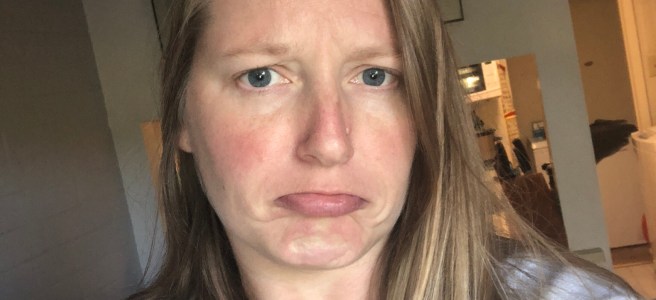
I can’t. 

“I can’t.”These are my 2 least favorite words. Especially as a teacher or coach. (I’m also going to be using these words interchangeably throughout this piece).

When you teach a lesson, clinic, certification program, or are merely answering a question from a buddy….there are times when these words pop up. There is no condition, illness, or environment more devastating than the “I can’t” affliction. 
It’s quite possible this affliction is the roadblock stopping you from achieving your goals. This affliction is easily treated though through simple mental shifts. My job as a coach is to try and lead you through your brain maze when it keeps putting up “I can’t” roadblocks. 


While I consider them helpful in any area, they came to mind as the temps drop I gear up for SNOW! Here are a few quick ways to shift your perspective and cure you of that dreaded “I can’t disease”:

– “I can’t, yet” – adding this 3 letter word takes something from an impossibility to an eventuality. The subtle shift in language translates big time in attitude. It’s important to remember that the loftier the goal, the more involved the prep is and that can impact the length of time to get there. It’s important to set milestone goals within our big/long term goals. 
– “Is there another way to accomplish this same thing differently?” – many of us struggle with injuries, physical limitations, or conditions. But there is almost ALWAYS another way to skin the cat (what a weird saying). If you’ve got a bum ankle, crappy depth perception, or lack strength in an arena – there’s probably a way to modify the activity or achieve the end result. That being said, certain goals require certain fundamentals – but don’t worry if you don’t possess those. You just don’t possess them yet. There’s a lot of (damn near) magic occurring in the realms of science, medicine, physical therapy, chiropractors, rehab, and strength and conditioning. Find the support/team to help get you to your goals – sometimes it takes a village. 
–  “That wasn’t it – but let me try it again” – when learning something new….you should have an expectation that you’ll need to work on it. You might need to work on it a LOT to make even a little progress. If you start the session by accepting that there’s likely to be repeated failures BUT with a commitment to continue trying anyway – it’s a game changer. 
–  “I can’t today” – it’s normal to get frustrated. Or tired. Or hungry. Or a combination (maybe that’s just me). When used sensibly to throw the towel in for safety or sanity, a time out is a perfectly acceptable tool while working towards your goal. 
The above list is certainly not all encompassing but if it saves me hearing (or saying) “I can’t” even once this year, then it was well worth it. Be aware of your obstacles. Especially if you’re the one building them. 

It’s ok to ask for help

It’s ok to ask for help
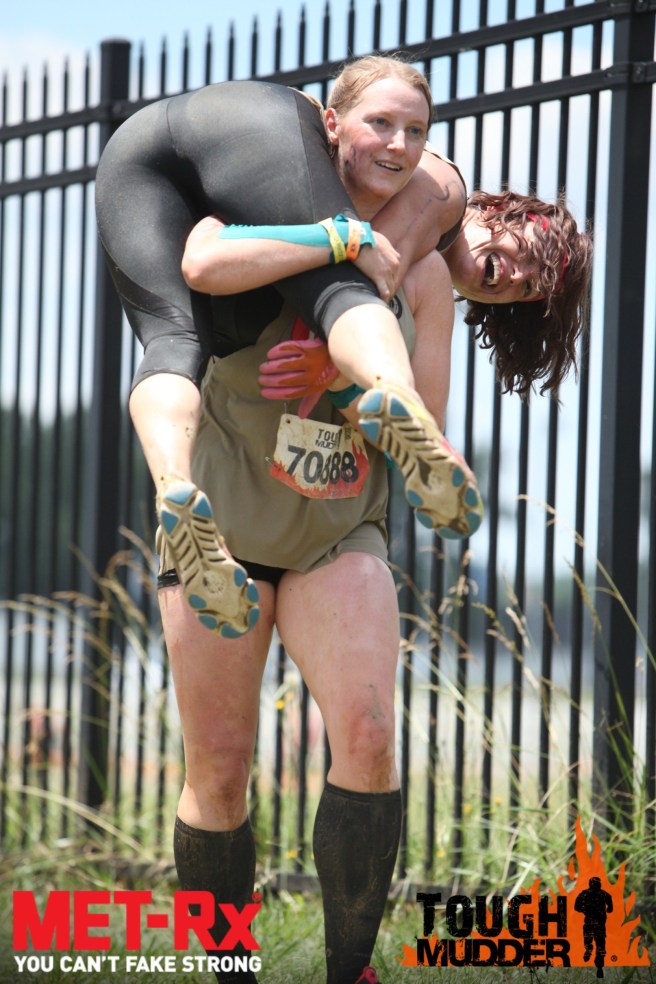
  

As a trainer I encounter people who often beat themselves up about not being able to stick to a diet, re-gaining weight they lost, or not working out consistently. While there can be benefits to being honest and realistic with yourself about your situation and weaknesses, those benefits can quickly be overrun by negatives if you allow them to. Look at any successful CEO or business owner and you’ll see a commonality: they surround themselves with people who can help them achieve their goals…especially in arenas in which they struggle. ‘Idea guys’ need a logistics person, ‘Engineer types’ need a people person, etc. I’m speaking in stereotypical generalities…but you get the point. Additionally, just because you know ‘what’ to do, it isn’t always easy to translate that into actually doing it. 

So when I meet someone who is successful at work and manages a family and hobbies but who expresses such frustration over not being able to control their nutrition, their workouts, or their weight…the solution seems simple to me: they need help

Help can come in the form of a nutritionist, a dietician, a personal trainer, Weight Watchers, beach body, a food logging program, a workout buddy, etc. What all of these things provide is accountability. Accountability is incredibly helpful during times of change and stress and let’s face it: changing a habit is stressful (even when it’s for the best). 

Our body reacts the same way whether we’re starting a new school, new job, moved homes, changed sleep schedules, get married, get divorced, or are introducing new nutrition and workout patterns into our lives. It’s something new. Something out of pattern. Something unusual. In short, it’s stressful. People (and living creatures in general) don’t naturally like that. When ‘stress’ occurs, we crave comfort. Something stable. Something we ‘know’. For so many of us, that’s food. Or sitting on the couch watching Netflix. Or a cocktail after a stressful day. 

So if the very change you’re trying to make is something you’ve turned to for weeks or months or years FOR COMFORT, then it’s a very difficult to change that very behavior. Even if it’s healthier for us in the long term.This is where accountability comes in. You need someone or something to help reinforce this ‘stress’ as something to endure until it becomes a habit/pattern and your body (and mind) accepts it as the new normal. 

This is why I’m not ashamed to ask for help (and you shouldn’t be either). After years of changing my lifestyle to a healthier, more fulfilling one, you would think I have this process down and wouldn’t need outside assistance, but you’re wrong. I’ve trained for and competed in bodybuilding competitions, strength competitions, and a marathon. I’m a personal and group fitness trainer and I help others meet their fitness and health goals. And I still ask for help. 

For each bodybuilding contest, I’ve hired a coach. For my Tactical Strength Challenges, I had a coach. For my first few strongman contests, I had what I refer to as ‘my 3 dads’ (experienced, knowledgeable, and selfless individuals who trained with me, watched technique, and helped me mentally prepare). Now make no mistake, I still did the heavy lifting (literally and figuratively). But it made all the difference in the world to have someone planning the strategy, someone who could help take the guesswork out of it and could tell me simply what to do and when. 

Specifically: after taking a year off after my last bodybuilding show to focus on growing additional muscle and strength, I happened upon strongman and became very intrigued by it and have (for the time being) decided to focus on it. I’ve been training for strongman for the past 6 months or so and its gone well. I took that time to figure out what was involved with the sport, what my natural strengths and weaknesses were, and where I fell along the competitive spectrum. 

During the past year and a half I’ve also enjoyed not having a physique based deadline looming over my head and have been indulging quite a bit. Unfortunately, without that deadline (or any real supervision) I went from enjoying occasional indulgences (but still listening to what makes my body happy) to over-indulging as a ‘norm’ instead of an exception. As a result, I gained fat, don’t fit in my pants as well, and I don’t feel good on a cellular level. 

When I came to this realization, I was approaching my most recent strongman contest and I decided that after my contest I would look to transition back to doing what makes me feel good on a regular basis while working to continue my growth in strongman. It made sense to me to ask for help with that. Currently I spend a lot of time working, training, and developing plans for others.  This is in addition to work and family.  It is easiest for me to take the nutrition and programming off my plate AND to have someone to hold me accountable. 

Additionally, I’m still new to strongman (and to serious strength training in general). I decided it’s a much better investment to hire a coach to do both for me. And that’s what I’ve done. I’m 6 days into phase one with my coach and excited, happy, and motivated. I’m not beating myself up, I’m not worried about results because I know I can trust him (as long as I follow the damn instructions), and the relief it has given me that I’m DOING something about it has been immense. While not everyone is in a position to hire a coach or trainer or nutritionist, there are other options. There are online coaching programs, groups that meet for regular exercise, Facebook accountability groups, challenges with fitbits, etc. Even the buddy system with a friend, neighbor, or relative can provide just the needed amount of oomph/accountability/consistency. 

I share this with you all because there should be no shame attached to asking for help.  Remember, you are living your life this very moment. It doesn’t start on Monday, after graduation, next season, or after you lose 10 lbs. SO: treat yourself with kindness and compassion (that means your body and your soul) and if you want to make a change, know that you’re responsible for the hard work BUT it’s ok to ask for help.  Really. 
My First Strongman Experience

My first strongman contest….sort of….and what I’ve learned and remembered

So as many of you know, I have been training in the evenings at my gym.  This happens to be the same time most of our Strongman contingent trains.  As I am a curious creature and always looking to experience new things, I (of course), have begun experimenting with some of the Strongman implements.  The athletes have been extraordinarily kind, helpful, patient, and giving of their time and expertise to help me learn some of the basics. This occurred while their own training reached a fevered pitch as they prepared for the 5th annual Capital Classic Strongman contest held on June 6th, 2015.

This was slated to be a ‘heavy’ contest as far as local Strongman contests go.  I assumed they were all heavy….and they are…but everything is relative and in their world, this one was going to be ‘heavier’ than many.  I was very excited to watch the events and to help out where I could.  I also agreed to compete in 2 of the ‘side’ events going on that day: a deadlift competition and a fitness medley consisting of 5 tire flips, a farmer’s carry for 50’, and a sled push for 50’ all for the best time.

I got there early that day and helped with the final setup.  As the deadlift contest approached (it was held first), I began my warmup, finalized my opening lift selection, and became incredibly distracted trying to continue helping set things up (moving the plates into place, moving tables, and running around gathering things needed). This is where I remembered my first lesson of the day:

Focus.  

While it is great to want to help out and to be part of the team, it was not appropriate for me to do so the morning of my contests.  Maximum effort lifts and heavy, medleys take a LOT out of you.   I should have been focusing on visualizing my lifts, timing my nutrition and hydration, and expending as little energy as possible.  I believe I will naturally do this when my competitions are held elsewhere, but I should have done so then.  Fortunately my coach caught me at one point and told me quite firmly to ‘Stop! And go sit your ass down somewhere and rest’.

The deadlift contest started and I easily pulled my opening attempt of 255 lbs (which was my PR at the April 2015 TSC).  I then wanted a new PR for my 2nd pull and selected 270 lbs.  I pulled it successfully and now had a 15 lb PR.  I now had to select a 3rd pull weight and immediately went into panic mode.  This is when I learned my next lesson:

Go for it.

One of the Strongmen (a former collegiate strength and conditioning coach as well as a former National champion Powerlifter) had watched my lifts and told me I should go 300-315.  My immediate reaction was, “you’re crazy”.  300 lbs has been my DL goal since my last TSC contest but I had figured it would take months and potentially years to get there.  He told me that I needed to go for it.  I already had a new PR so anything above it would just be icing and that 3rd pulls were the time to push yourself.  My coach agreed with a head nod and scrunched forehead as though saying ‘Of course you can pull 300’.  So I gave my 3rd attempt weight and went essentially blank.

I approached the bar and remembered the words of the show host: “Don’t think, just do it”.  I took a deep breath, braced my core and tightened my back, hinged down, quickly set my hands, and began pulling.  It was heavy and didn’t seem to move but I kept pulling and slowly it began to break off the floor.  I knew once I had it off the floor, I would pull it all the way as I am much stronger at lock out than I am off the floor (something I’ll be working on for the next several months).  I locked out, lowered the bar back to the ground, and grinned – I had a new PR.

In hindsight, I’ve probably been a much stronger puller than I thought and I most likely just never taxed myself to the point of finding a true max (and still haven’t since I successfully pulled the 300).  While I’m all for sensible and progressive training to help minimize the chance of injury, sometimes we need to stop selling ourselves short and push the envelope on occasion to make mental gains that will keep us moving in concert with our physical gains.

I had some time to rest before the fitness medley and I did.  When the medley began, I performed well.  There were definite movements and elements I can improve upon (and I will) but I was pleased overall with my performance in my first ‘strongman like’ mini contest.  I also got to meet THE Brian Shaw (3x World’s Strongest Man).  He is a genuine, patient, and caring person who was a pleasure to have at the event.

After that, it was time to relax and enjoy the contest.  I got to see a number of amazingly strong competitors lifting VERY heavy objects. There’s something very primal and satisfying about it and I encourage you all to check one out if you get the opportunity.  While watching I learned/remembered 2 important lessons:

Be precise

Don’t quit

There were a number of events where an improved ‘pick’ of an object or adjustment would have resulted in better results for the competitor.  There were dozens of times when a competitor was inches from getting a stone onto the platform but made their final push and fell a bit short.  As a result, they had spent the majority of their energy resources and now had to start from scratch again.  This is where being precise in training and competition and being very aware of your surroundings seemingly makes a big difference.  That being said, all of them lifted heavy, awkward objects that most of the population would struggle with.

Lastly, I was impressed by the number of competitors who did not quit and kept working for the entire time period even if they struggled time and again with the same stone or implement.  I’m a firm believer in giving it all you have so there are no regrets.  Even if they were unsuccessful with an event at this competition, I believe all of them will go back to their gyms and keep training to be more successful next time.

In fitness and in life, there is no ‘destination’.  There is no final ‘arrival’ when you can now slack off and quit or rest on your laurels.  The journey is all there is. Make it a good one.